
ROLF’s Ramblings
TURBO TAKEOVER: AI’s threat to racing?
Driverless cars haven't sussed out whether flashing headlights indicate "come on" or "get back". The first robot vehicles, driven by Artificial Intelligence, hit the streets of London this month. AI is the current whipping boy (can't say "whip" in racing any more, has to be "ProCush"). Jeremy Clarkson says not to worry, the robo-athletes "couldn't load a dishwasher". He wasn't impressed by the AI "champions" of China's recent Humanoid Robot Olympics. The headline grabber, Tiangong Ultra, looking like a cousin of the runner-up in the recent Clacton by-election, left Usain Bolt's untouchable 100 metres record for dead.
No synchronised swimming or curling at the "Games" , those robots haven't been programmed yet. But eh, let's not be too churlish about prototypes: tin cans would never have worked if someone hadn't simultaneously invented can openers. The word robot (Czech for "slave") was only invented a hundred years ago. But the big question now, even if we shun "the Games" (Britain didn't send a team), is this: is AI Royal Ascot on the cards?
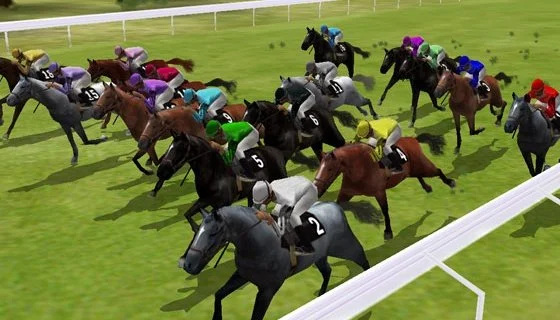
Virtual Racing
Racing's paymaster, betting, has always been ahead of the game. Betting shops grabbed computer-generated "cartoon racing", jumps and flat, turning once-serious community hubs into glorified amusement arcades, not that there are many laughs in your local "morgues" nowadays. Even as one noted that shop numbers were on their way down from thirteen thousand in their heyday to below half that number, two hundred of them from the trailblazing Paddy Power empire went west. That most flamboyant of bookmakers, the late John Banks, catch-phrased his betting shops "money factories". Today they're "end of the pier" operations.
Fecund neighbours "Traditional Turkish Barbers", nail bars, vape shops, come in clusters, while former High Street leviathans, Woolworths and W H Smiths, drop out. And yet back in 1850 four hundred or more betting shops operated legally in London, banned three years later after the proprietor of the best known, Dwyer's in St Martin's Lane, "left town" abruptly. Bookies operated clandestinely for the next hundred years in "dens" or from the streets with "scouts" and "runners", the only dilemma being whether to outrun the police, or pay them off. Just before betting shops were legalised, a Daily Mirror journalist wrote: "I stopped a policeman and asked, 'Please can you direct me to the nearest place where I can put a bet on a horse?' 'Certainly, sir - straight along the road; you'll see a little doorway, go right in.'"
Ironic is an overused word, but betting shops were sanctioned in 1961 to take illegal betting off the streets and corral punters indoors. With delicate hypocrisy the government encouraged gambling, while salving its conscience by insisting the new emporia must be so shoddy "slums" that nobody would be seen dead in them.
They were packed from day one; standing room only, well, there were no seats.
The Sporting Life was doubtful: "Who is going to leave his armchair to go out, perhaps in the rain, to do what he can do in comfort simply by lifting the telephone? No one in his right mind." William Hill, bookmaker extraordinary, in his Blackfriars eyrie with its four hundred phone lines and clients betting in telephone numbers, didn't immediately see the future of fug-filled hovels. "Only a third of the shops that open will still be in business after a year," said Hill. No paragon himself, he started up with an illicit den in 1934 he saw workers taking up "residence" in shops instead of clocking on. The country would go to the dogs. There'd be no factory whistle ending "shifts" at the betting shop.
Now the tocsin sounds for betting shops that, ironically (that word again), have been tarted up like poodle parlours. Squeaky clean, sanitised, a kaleidoscope of screens, and empty. Where have all the punters gone? Back to their armchairs and the internet, nearly every one and to gambling attractions other than horseracing. Horseracing's betting jungle has been deforested.
Soon, William Hill saw his mistake and bought an established chain. By the mid-1960s he had 850 premises. Like Don Corleone, the Godfather unhappy meddling with drugs, Hill harked back to the old days, punter v bookmaker, not necessarily a fair fight, but personal. The shops, throbbing with life, however low, became every bit as "social" as Working Men's Clubs. Then in 1998 the FOBTs (Fixed Odds Betting Terminals), soon castigated as the "crack cocaine of gambling", marched in. You could call them precursors of AI, but you had to have a low IQ to keep feeding them: a tsunami of one-armed bandits, and skint punters.
And yet Hill's original prophecy has, belatedly (he died in 1971), come to pass. Between wacky AI races "moving wallpaper" added to screen bingo, casino games and technicolour sports, racing is squeezed, and shops shut. Lesser tipsters, Nostradamus, Greta Thunberg, forecast that the end is nigh: nobody saw the eclipse of the most famous name in bookmaking. William Hill was sold off to Greeks this summer. Ironic, isn't it, that the sans pareil of bookmaking's famous banner was "Hill No Limit". There are no limits, seemingly, to AI's takeover. Now you can bet from anywhere on the planet, or off it! (I recall Moscow's betting shops, back in the glasnost days of the 1980s, were furnished with deep leather seats and all the creature comforts.)
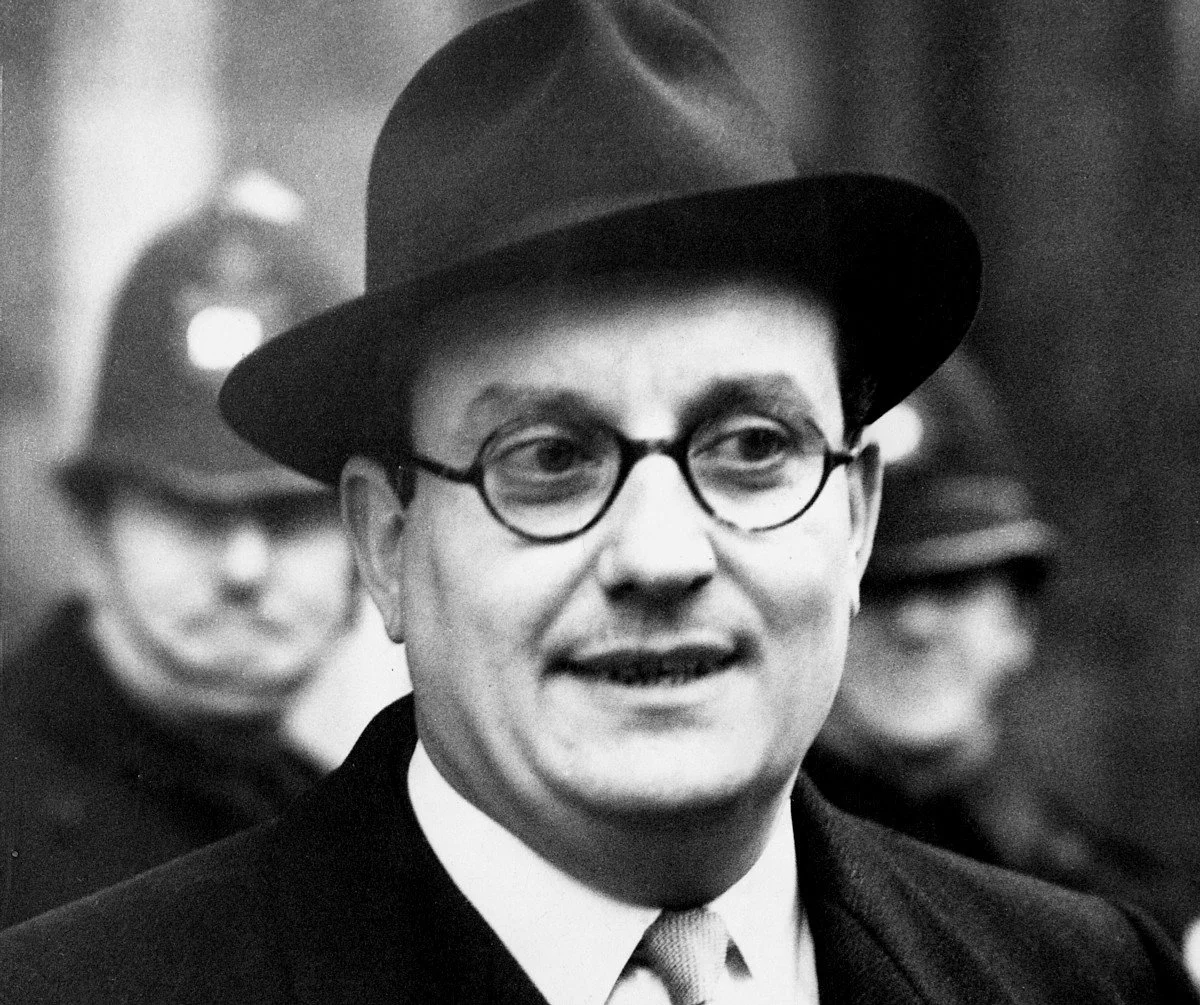
William Hill
Virtual Racing is AI's handiwork. Multi-factor performance metrics and contextual sorting tools are the new boffins, I've no beef against AI dissecting pedigrees, stride patterns, sectional times, all in the pursuit of fathoming what makes one horse go faster than another, everything from a fly bite to a ProCush fly bite. But the romance is bleeding from the game under pressure from ever-increasing "automation". "If AI causes a financial crash and gets rich, what's it going to buy? A Ferrari?" demands Clarkson, but the fact is AI has no taste buds, still less "feel", and won't care if it provokes, for racing in its current nervous and vulnerable state, a financial crash: a terminal malady. "Nurse, the screens" sixteen I counted in our local bookies, and nary a soul to shout "Come on my son".
It was less than a decade ago that an apologist wrote: "They (betting shops) have irrevocably established themselves as a vibrant component of the High Street, providing enjoyment and employment, and a vital source of tax and duty revenue for the Treasury." "Irrevocably" has left town too.
Winston Churchill, like any true racing man (which he was), tried to have his cake and eat it, introducing a betting tax in 1926 that barely lasted a couple of years. Racing's history tells us that its fortunes are tied, umbilically, to betting and to regard for the unpredictability of the horse rather than slavery to machines. And still, a new generation of tax-obsessed politicians wilfully turns the clock back again. AI? Whose side is it on?