
Weather, Ground, and Everything in between
By Megan Bulbulia
I know it may be cliché to have the weather as a main talking point, but I think we can all agree that the last few months have been far from usual! The dirge of rain at Epsom feels like a distant memory and the crisp grass underfoot has become the norm in this serious spell of hot weather.
Going reports have taken on a rare monotony of “firm, good to firm, firm in places”, but racing, as always, has adapted to the unusual conditions. Some racecourses have adjusted fixture timings to accommodate horses and punters alike, racing earlier in the day to sidestep the worst of the heat. All the usual welfare measures have been taken, shorter parading times, an increased veterinary presence and misting fans installed in the wash down areas.
Travel restrictions were in place during the peak of the heatwave, and fixtures at Kempton, Salisbury, Worcester and Ffos Las were cancelled by the BHA as temperatures pushed toward the mid-thirties. Royal Ascot, a very hot week in its own right, remained unaffected, and it's worth wondering just how serious the temperature would have to get before the Royal Meeting would veer from tradition. Back in 2022, the dress code was relaxed for the Friday of the meeting with men being permitted to remove their tops, tails and ties as temperatures reached 31°C. This year Ascot escaped the very worst of it, but other fixtures, the July Festival at Newmarket among them, endured high temperatures and stuck to dress code and race timings regardless.
A Thoroughbred is, by evolutionary design, remarkably well equipped to run in the heat. Of course it is unusual for them, since they are quite often born and bred here or in Ireland or France, but deep down they have the physiology to cope with high temperatures.
The Thoroughbred as we know it descends from three foundation sires, the Byerley Turk, the Darley Arabian and the Godolphin Arabian. Every Thoroughbred alive today traces back to one of those three horses, and they came from desert landscapes that are defined by heat and aridity.
The equine lineage began 55 million years ago, as a small, multi-toed browser called Eohippus, which evolved into the modern horse that we know today. They grazed on wide open plains, and therefore favoured speed over concealment. They certainly are “flight over fight” animals, and some are very much “fright”! This is where the speed and stamina of the Thoroughbred emerged, with animals that could flee from predators surviving and therefore passing on their speed to future generations.
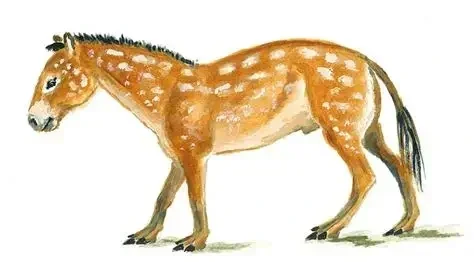
Eohippus (Early horse ancestor)
The design of the Thoroughbred may have taken millions of years, but it has prepared them for these unseasonably warm conditions perfectly. Large nostrils cool air on the way to the lungs. They have an efficient sweating mechanism that keeps them cool during sustained exertion. In fact, a large portion of weight lost during a race is all from sweat.
What Thoroughbreds are less well equipped for is running on such firm ground. The concussive stress on legs and joints can pose a major threat and cause injuries. As we know, racecourses have been watering constantly to ensure the ground is safe and raceable, but in the age of the ever increasing hosepipe ban, racecourses will need to be conscious about the public’s perception of this act. Many racecourses are already inventive and resourceful about how to sustainably collect water. In my short time at a few racecourses, I have seen several clever ways of collecting rainwater, whether in large reservoirs, boreholes, or off the roof of the grand stand and stables. The image of a lush green racecourse is beautiful to us, but for those who are not involved, or informed, it could appear wasteful and unfair.
If the last few months are any guide to the coming decades, the sport may increasingly be asked pressing questions, and it will be important to have the answers to hand. Racing in the heat is feasible, as long as the right measures are in place to ensure horses can cool down efficiently and are closely monitored at all stages. Ground conditions are also closely monitored, and while it is normal enough to race on “quick summer ground”, anything deemed too firm is watered and made as safe as possible.
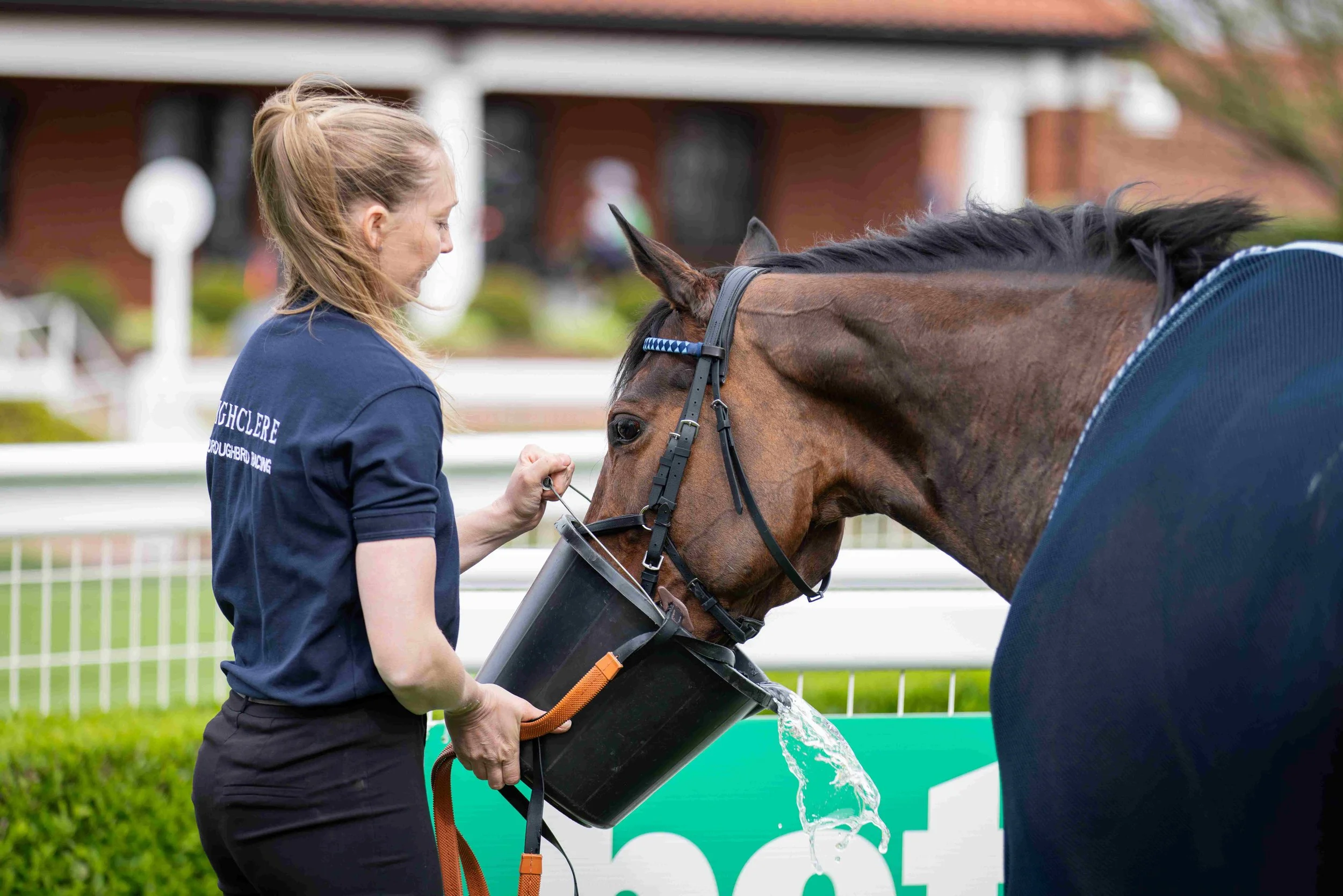
Spycatcher enjoying some water post-run